
There’s an iceberg waiting for us when we walk into our Airbnb rental. It’s right outside the big picture windows that line the northeast side of the house, sitting in a cove that opens into the vast North Atlantic Ocean just beyond. It’s like Hollywood’s idea of a perfect Newfoundland scene, so perfect it’s almost fake. But since icebergs are one of the reasons we came to Newfoundland, I’m ridiculously happy to see it.
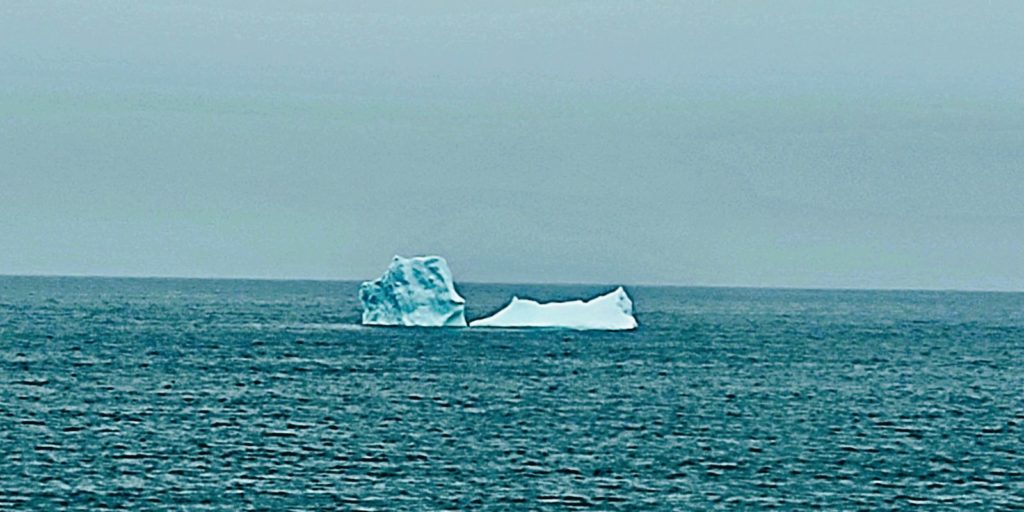
Late May through early June is the best time to catch sight of icebergs as they drift down Iceberg Alley, a maritime corridor stretching from Labrador down the coast of Newfoundland. There are several prime iceberg-viewing spots along their way south: Twillingate, Bonavista, St. John’s–we plan to hit them all. But for now we’re in St. Lunaire-Griquet/St. Anthony, at the tip of Newfoundland’s Great Northern Peninsula, just in time for the region’s Iceberg Festival. Even though it’s mid-June, the Iceberg Festival is a celebration of spring’s arrival.
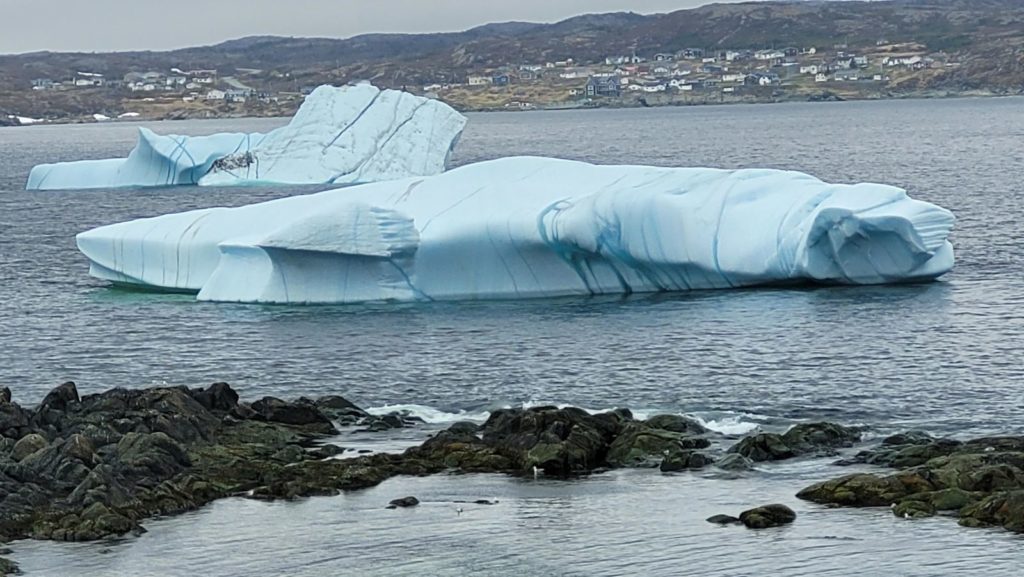
We’re not alone in our fascination with these giant frozen visitors. During our travels, we meet people from all over the world who have come simply to follow the icebergs. They find them on their own or make use of the many Facebook groups and websites tracking the location of the season’s behemoths. Icebergfinder.com in particular uses satellite data as well as crowd-sourced photos to keep searchers informed and on the move. You can even sign up for iceberg alerts.
Most of the icebergs we see along Iceberg Alley broke off from glaciers in western Greenland maybe three to six years ago. They’re at least 10,000 years old, but their drift south from the frigid Arctic is the beginning of their end. By the time they reach Iceberg Alley, their days are numbered. They can’t survive the warmer air and water temperatures of the Atlantic Ocean.
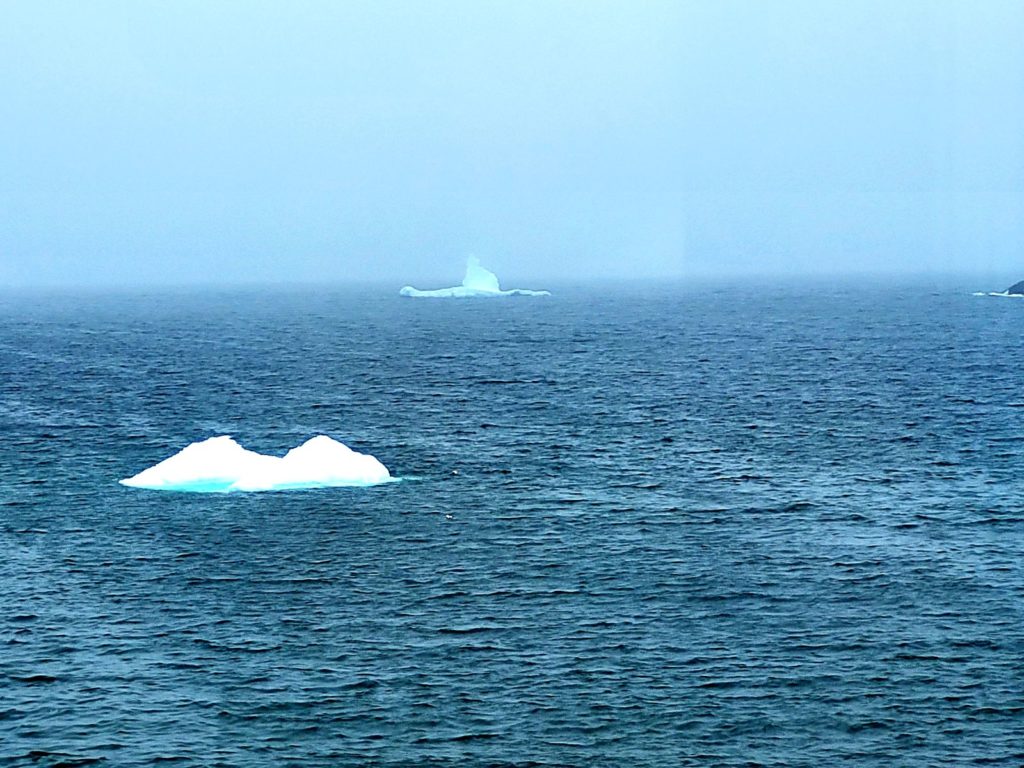
We see this with our own personal iceberg in the cove. It changes every day. First, the smaller side breaks off, leaving the “mother ship” in a spurt of independence. Each day, the runaway part of the iceberg floats closer to the shore. It breaks into multiple pieces along the way. One morning, I look out the window to see most of the pieces (“bergy bits” or “growlers,” depending on the size) scattered across various points of our shore.
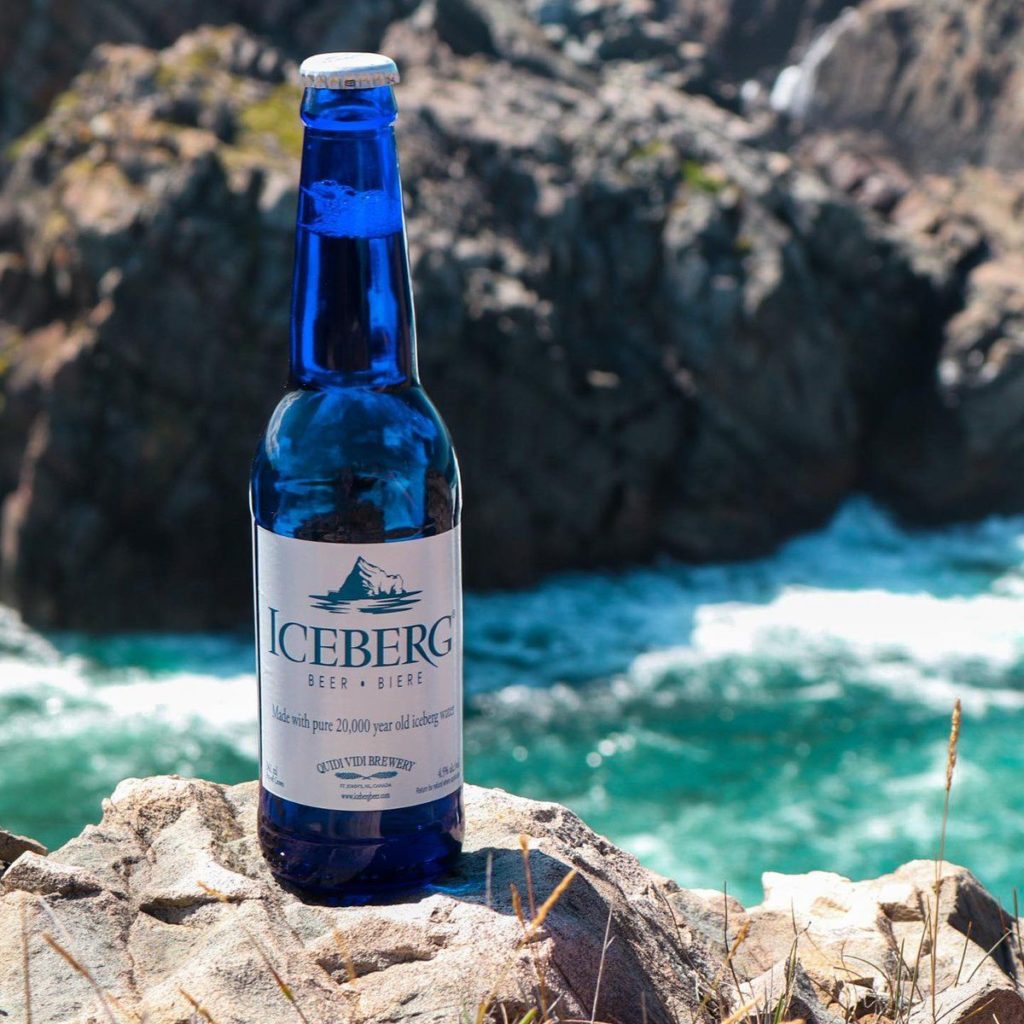
These particular bits seem destined to melt all alone on our remote shore, but some bergy bits get put to use before they can vanish completely. Icebergs are composed of snow that fell thousands of years ago, long before the atmosphere contained modern pollution and industrial chemicals. Because of this, water from the trapped ice is remarkably clean. Ice cubes made from iceberg water are a thing: people harvest the ice to use in drinks. Local restaurants hack off pieces of bergy bits to chill cocktails. Quidi Vidi Brewery in St. John’s is proud to brew Iceberg Beer, crafted with iceberg water potentially 10,000 to 25,000 years old.
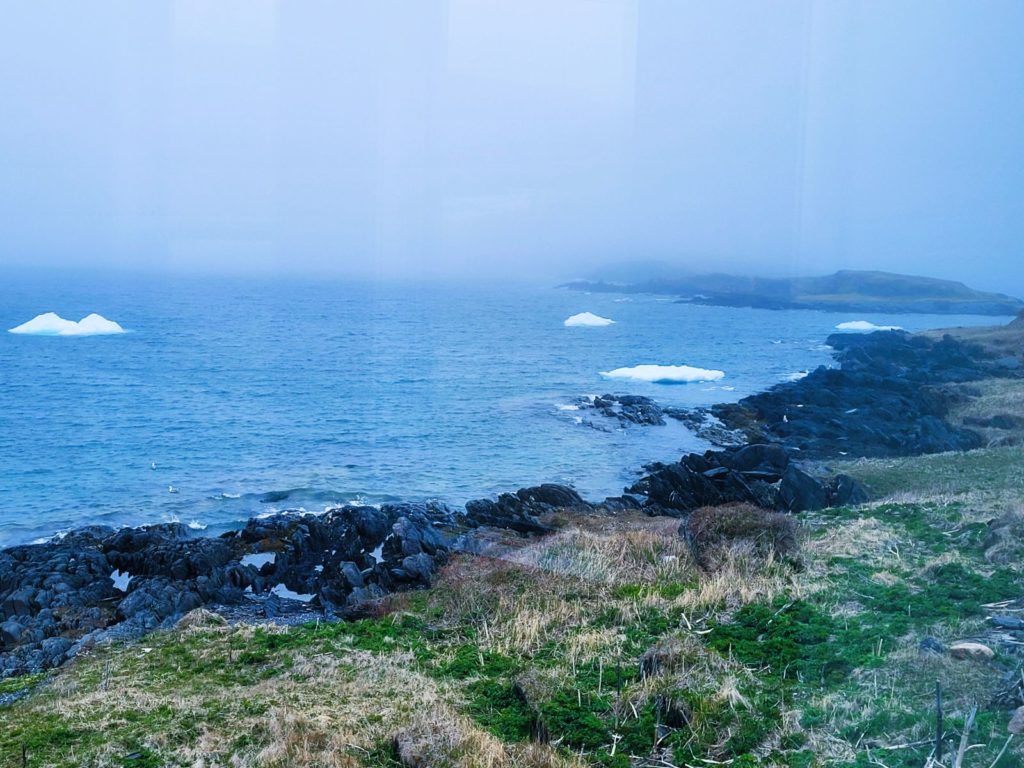
I know that everything has a life cycle. Still, it seems to me that something that has survived for thousands and thousands of years, navigated ocean currents far from home, and finally sailed majestically along the Newfoundland coast (to our viewing pleasure) deserves a better death than the slow, lonely melt we witness outside our windows. The remaining hunk of our iceberg looks smaller and more resigned with each passing day. It’s still in place when we leave, but it’s noticeably diminished, like it knows it’s only a matter of time before it, too, breaks apart to disappear upon the shore.
I hope it at least ends up in a cocktail.


Cool . . . literally. Not to let you have all the fun, there are two riddles in the tenth-century Exeter Book commonly solved as ‘iceberg’. You’ve got my book, but I’ll email you the excerpts for convenient reading.
Thank you, Robert!
“Bergy Bits” is the best thing I’ve learned all week.
Kristina, I know. So cute. Actually, bergy bits can be the size of a small house. “Growlers” are smaller.
Fascinating. It must have been amazing seeing this right outside of your window.
Mary, it was (literally) one of the coolest things!