
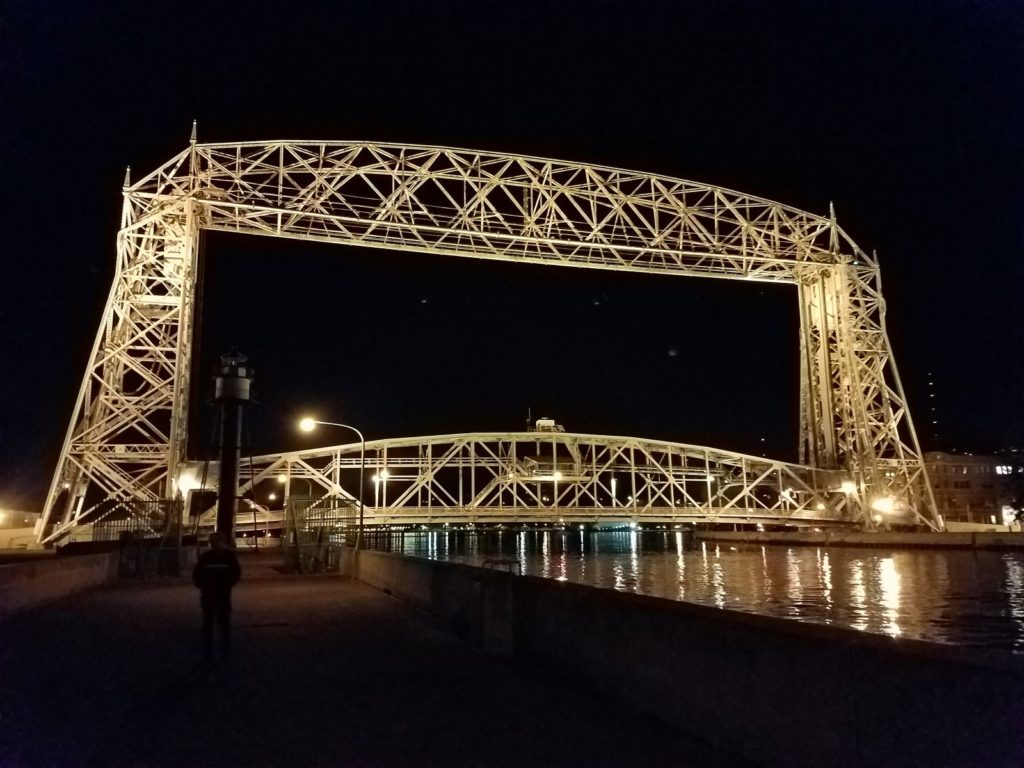
I come to Duluth because I want to see the Aerial Lift Bridge. I’m not the only one. The Duluth Aerial Lift Bridge is one of the most popular attractions in Minnesota. According the U.S. Army Corps of Engineers, about 1.5 million pedestrians a year visit the Duluth Ship Canal piers to watch the 900-foot span of the bridge rise to create maximum 135-foot vertical clearance for the massive lake freighters that pass beneath.
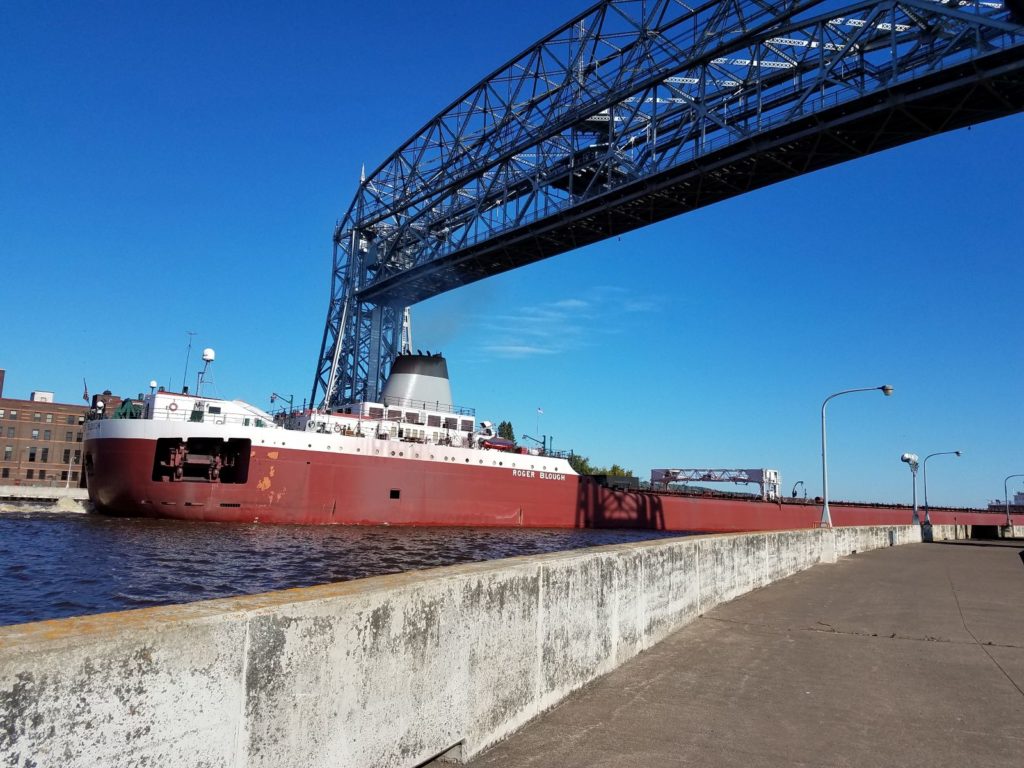
Looking northeast from the South Pier, I see the wide-open vista of Lake Superior. That’s when I begin to sense what might have drawn me here. Duluth is situated at the westernmost tip of this deepest and largest of the five Great Lakes. When you’ve lived your whole life on the east coast of the U.S., as I have, it’s easy to forget that there are significant waterways other than the Atlantic Ocean and the rivers that empty directly into it. But together, Lakes Ontario, Erie, Huron, Michigan, and Superior make up 84% of North America’s fresh surface water. They’re vast inland seas, complete with heavy currents, mercurial waves, and violent storms that rival anything the salty ocean can dish out. They bring their own distinct mystique and maritime culture. Attention must be paid.
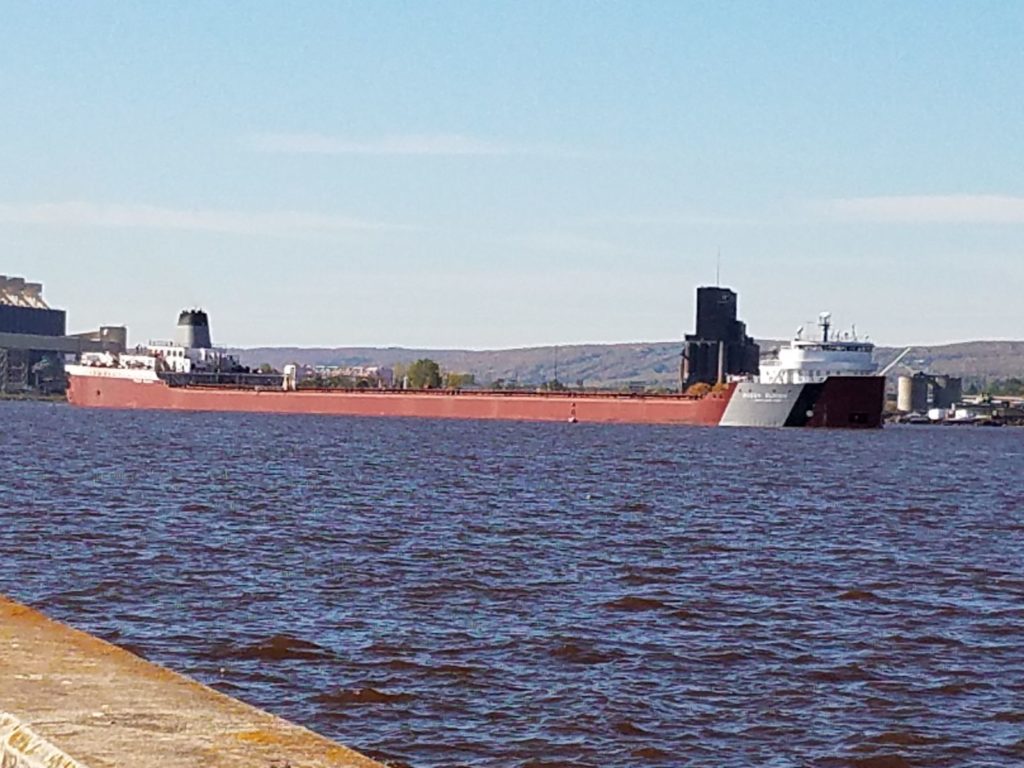
Most of the freighters cruising beneath the Aerial Lift Bridge are lakers, ships built specifically to travel the Great Lakes. They can’t survive on the ocean. They’re long and narrow, structurally unable to ride an ocean wave without snapping in two. Some can’t leave the Great Lakes system anyway–they’re too massive to navigate the St. Lawrence Seaway, the only connection to the Atlantic Ocean able to accommodate large commercial ships. Because a laker lives its life on the Lakes, never encountering salt corrosion, over 25% of them currently sailing are over sixty years old.
Ten to fifteen percent of the ships arriving at the Port of Duluth are ocean-traveling salties. Smaller than lakers, they entered the Great Lakes system via the seven locks of the St. Lawrence Seaway, which gradually lifted them approximately 226 feet to finally access Lake Ontario. From there to Duluth, the ships navigated the series of locks, rivers, and lakes that connect each Great Lake to another. The salties pay close attention to the calendar. Come winter, the St. Lawrence Seaway freezes, shutting down completely from around late December through late March. If an international ship doesn’t pass back out to the ocean in time, it risks spending winter trapped on the Great Lakes. Most salties exit the Montreal locks long before the weather can touch them.
I originally came to Duluth for the bridge, but I think I’d go back for the chance to see a ghost ship. These are the freighters that reach the Canal in frigid winter. Without salt, the Lakes freeze at 32 degrees. Heavy winds create a constant frenzy of spray. By the time a ship reaches the Aerial Lift Bridge, it can be sheathed in hundreds of tons of crusted ice, gliding through the canal like a white specter.
You can use the Duluth Harbor Cams to watch the Aerial Lift Bridge in real time. Check the schedule; maybe you’ll catch a freighter passing through on its way to port. Listen for the horn-tooted exchange between ship and control house as the ship approaches the bridge. Initiated by the captain of the ship, it’s usually the Captain’s Salute (one long blast followed by two short ones). The bridge operator will respond with the same pattern, welcoming the ship to the Port of Duluth.


OK as a lifelong Michigander (even though you’re mostly talking about Minnesota here) this post delights me. Fun fact, one of the worst sunburns I ever got was on the shore of Lake Superior. Turns out the summer sun doesn’t care how far north you are, or how cold the water is.
When I worked my last job, the river was deep enough, and the town industrial enough, that the lake freighters could sail right through town. The scale of those freighters against the modest brick buildings of a small Michigan city was wild. Woe upon you if you were caught on the wrong side of the river when a freighter was going through.
Kristina, your comment about the wrong side of the river reminded me of waiting out a freight train at a railway stop.
The lakers are so different from what I see in my waterways. They’re unique to your part of the country, and I’m glad I had the opportunity to experience them.
Don’t forget Gordon Lightfoot’s ‘The Wreck of the Edmund Fitzgerald’:
Lake Huron rolls, Superior sings
in the rooms of her ice-water mansion
Robert, I thought of that song while I was writing this post, especially since last year was the 50th anniversary of that shipwreck. There was so much to say and so little space. I’m glad you brought it up.
It took restraint on my part not to write a reply here that resembled a whole other blog post, but you can look up how the Aerial Lift Bridge and ships passing through remember the Edmund Fitzgerald and its lost crew on each annual anniversary of its loss (November 10th).
Thanks, I will check that out.
The song’s one of Lightfoot’s better productions, which is saying something for a song which is all verses, with neither chorus nor bridge. it shoud be monotonous as, but the orchestration and dynamics are pitch-perfect and shape the movement of story and emotion beautifully.
Robert, I’ve always thought that, too. It captures both the essence of the story itself and the musical tradition it honors.
When Lightfoot was on point, he was awesome. It’s a bit of an obvious call, but ‘If You Could Read My Mind’ is another one of those perfect songs that can still haunt you years after you first heard it.